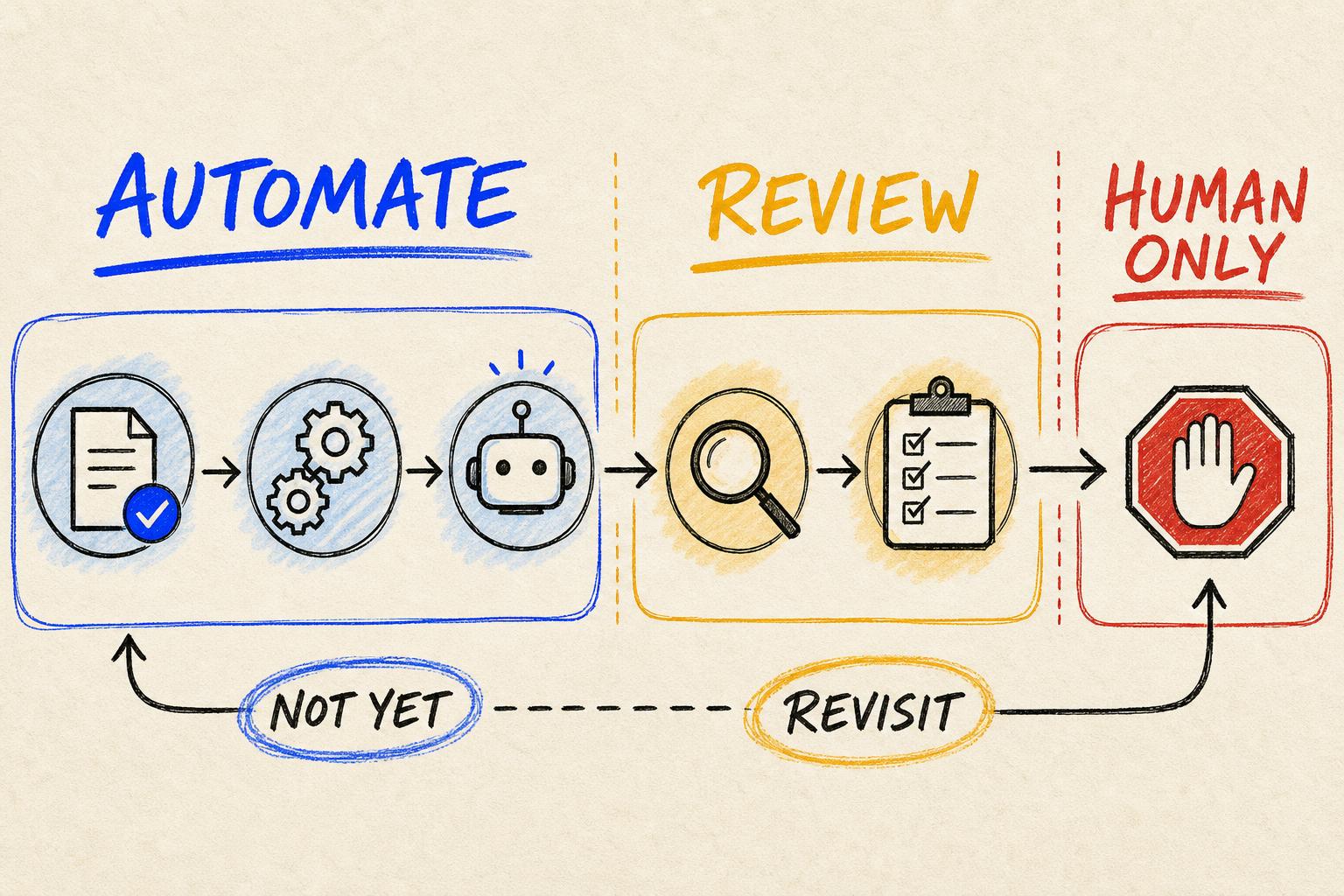
Building was possible. Deploying responsibly was not, at least not yet.
The process involved sensitive judgement, inconsistent inputs and outcomes that were difficult to reverse. From a technical perspective, many steps could be automated. From an operational perspective, the workflow was still unstable.
I felt the familiar pressure to show progress. ‘We should clarify the process first’ does not sound as exciting as an agent taking action. But automating confusion would only make the confusion faster and harder to see.
That experience taught me that deciding where AI should stop is a core delivery skill.
The team did not have one process for the system to learn.
Different employees completed the task in different ways. Required inputs changed by person, exceptions lived in memory and nobody agreed on what a successful output contained.
- Unclear trigger
- Missing required inputs
- Different success definitions
- Unowned exceptions
- Inconsistent data
- No recovery path
AI would not resolve that ambiguity. It would choose patterns invisibly and make inconsistency look polished.
I looked at what would happen when the system was wrong.
Deleting records, sending commitments, changing permissions or making employment decisions carried consequences that could not be treated like a normal draft. AI could prepare the work, but automatic execution needed a much higher standard.