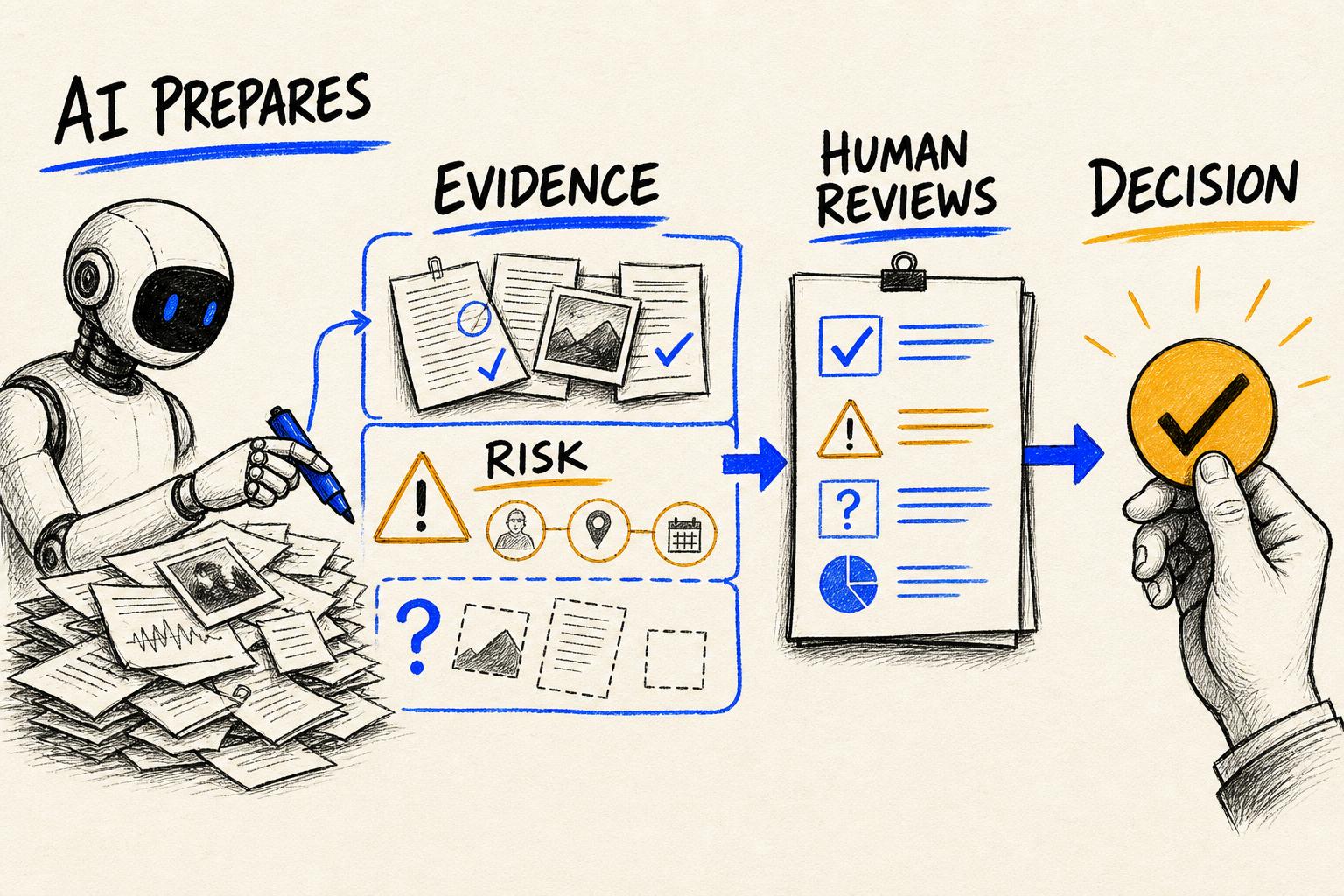
The system could recommend an answer. The harder question was whether it should be allowed to decide.
We were reviewing a workflow where a manager had to assess risk. The AI could summarize recent activity, highlight delays and suggest a response. It was easy to imagine one more step: let the system take the action automatically.
That possibility felt exciting and wrong at the same time. The model had made the preparation faster, but it did not carry the accountability, relationship history or consequences of a bad call.
I realized we were measuring the system by how much human involvement it removed instead of how much better it made the human decision.
Most of the time was being lost before the decision, not during it.
The manager searched for context, compared sources, reconstructed history and identified what was missing. That preparation took longer than choosing the next action.
- Summarize recent activity
- Highlight missed deadlines
- Surface unresolved dependencies
- Extract concerns
- Compare progress with plan
- Suggest questions to investigate
AI was unusually good at organizing that evidence. The opportunity was not to replace the manager. It was to make sure the manager began with clarity rather than scattered information.
I separated preparation from consequential action.
Drafting, classifying and recommending could happen automatically. Sending external communication, changing a financial record or rejecting an important request required a responsible person. The boundary became part of the product, not an afterthought.