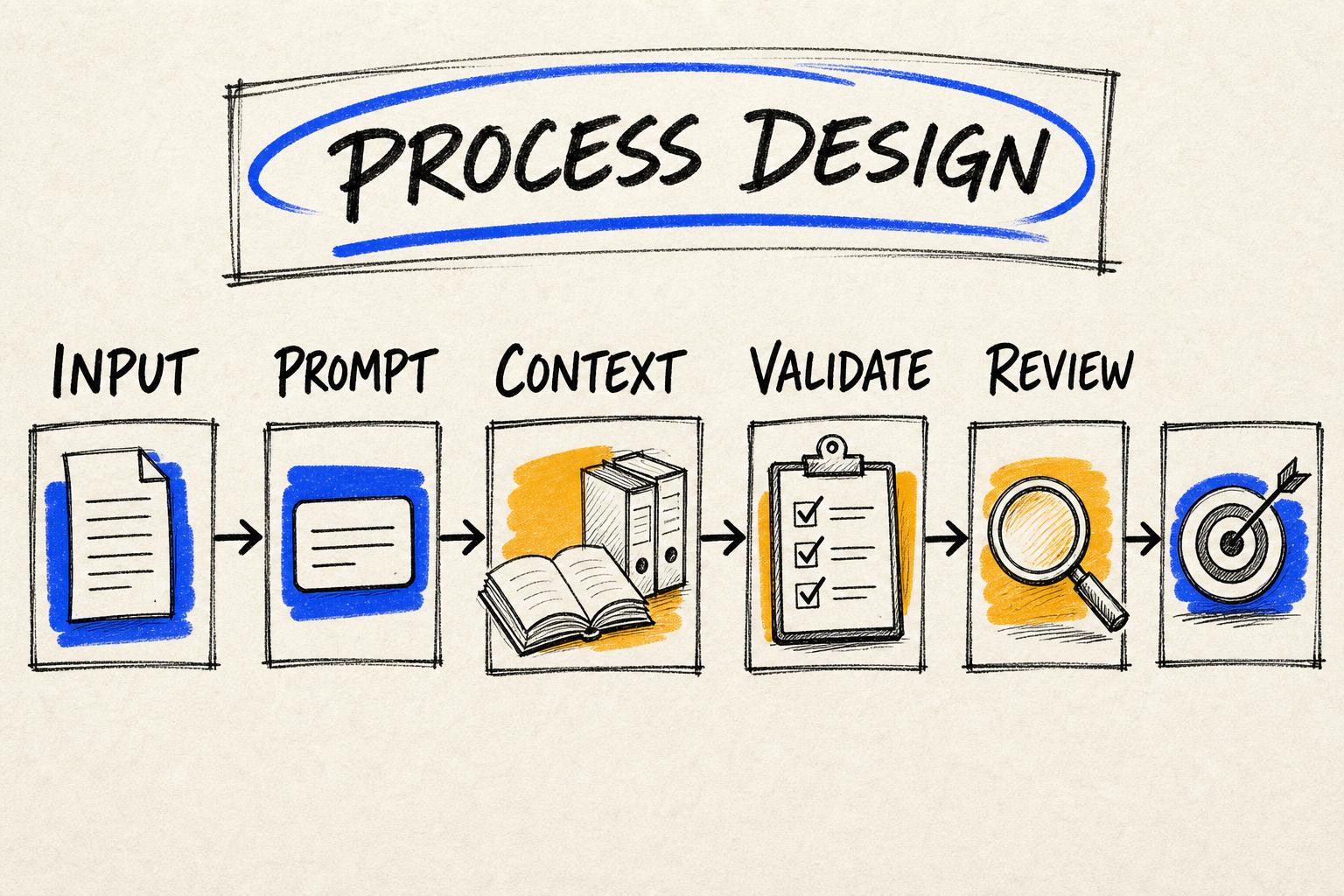
The prompt became longer, more precise and harder to maintain. The result still failed for the same underlying reason.
When an output was weak, my first instinct was to improve the prompt. I added examples, rules, tone guidance and formatting instructions. Sometimes the next test looked better.
Then a different input produced the same inconsistency. The model had received incomplete source data, irrelevant context and no reliable definition of the required output. Better wording could not repair that system.
That experience moved prompting into its proper place for me: important, but only one component of process design.
The model was only one stage in a much larger workflow.
Input collection, cleaning, context selection, permissions, validation, review, storage and downstream action all shaped the result.
- Input structure
- Source quality
- Context selection
- Model choice
- Output validation
- Human review
A strong instruction could not compensate for missing ownership or a source document that nobody knew was outdated.
Clear fields improved the output more than another paragraph of prompt guidance.
Replacing ‘review this project’ with a structured set of objectives, status, deadlines, blockers and required output gave the model a stable problem to solve. The improvement came from the process becoming explicit.