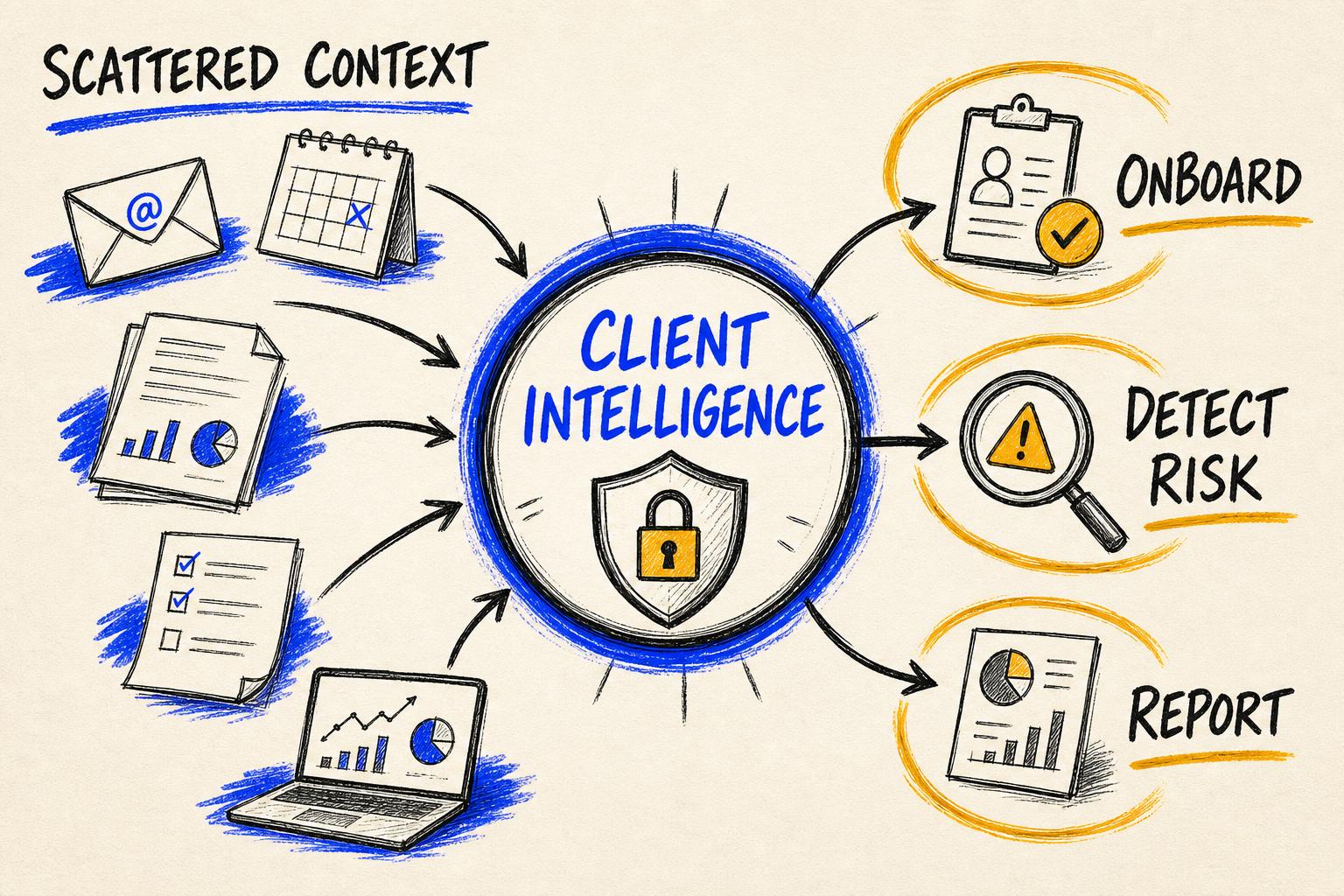
We could find every individual document. We could not quickly reconstruct the client story they formed together.
The question sounded simple: what had changed, what was at risk and which commitments were still open? The answer lived across meeting notes, tasks, reports, email and several people’s memories.
A new team member could see current activity but not why decisions had been made. Account leaders could feel risk before the systems made it visible.
I realized the agency had many repositories and very little shared client intelligence.
Every system held an accurate fragment and no system held the account.
The CRM showed stakeholders. Project tools showed tasks. Reports showed performance. Meetings held decisions and concerns. Email contained commitments and nuance.
- Client objectives
- Stakeholders
- Meeting history
- Decisions
- Open work
- Risks and commitments
The value appeared only when those fragments could be understood as one permission-aware client history.
We organized the context needed to understand and serve the account.
The goal was not to copy every file into one database. It was to create a structured, searchable view of the objectives, decisions, activity, risks and evidence people needed for account work.