A polished answer without a visible trail asked the user to believe more than the workflow had earned.
The recommendation was reasonable. I knew which documents the system had searched and how the result had been prepared. The user saw only a confident paragraph.
They asked the most responsible questions: Which source supports this? Is this a fact or a suggestion? Has anyone reviewed it? What happens if it is wrong?
The product had treated explainability as technical documentation. The user needed it as part of the interface and workflow.
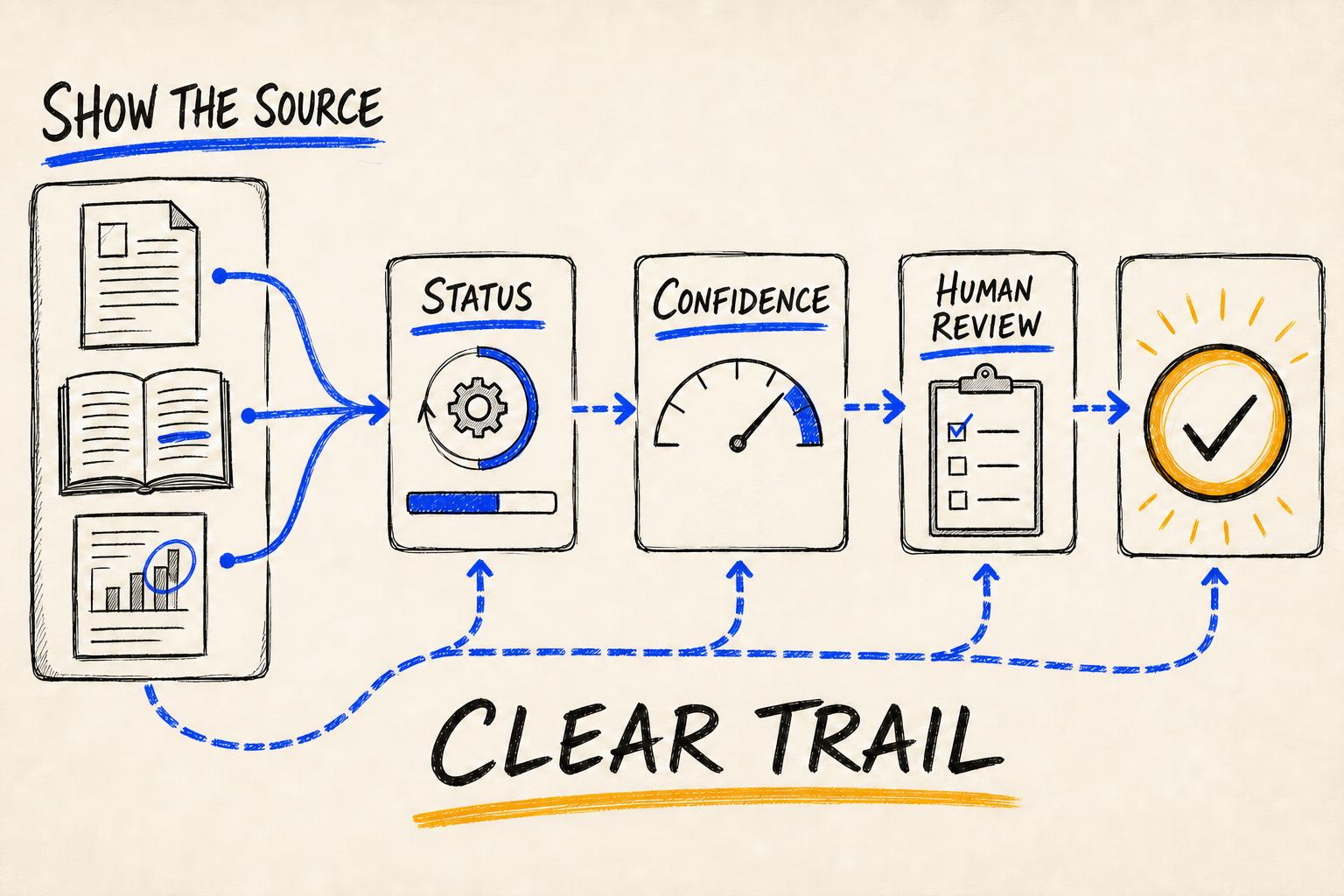
A claim became reviewable when the evidence travelled with it.
Document names, meeting dates, relevant sections, timestamps and original links gave the user a practical way to verify important information.
- Source name
- Relevant section
- Date and freshness
- Original link
- Processing status
- Reviewer state
The system did not need to expose every internal calculation. It needed to expose enough evidence for responsible review.
Facts, interpretation, recommendation and approval needed different labels.
When those categories appeared as one voice, a suggestion could look confirmed. Separating them helped users understand what the system knew, what it inferred and which decision still belonged to a person.