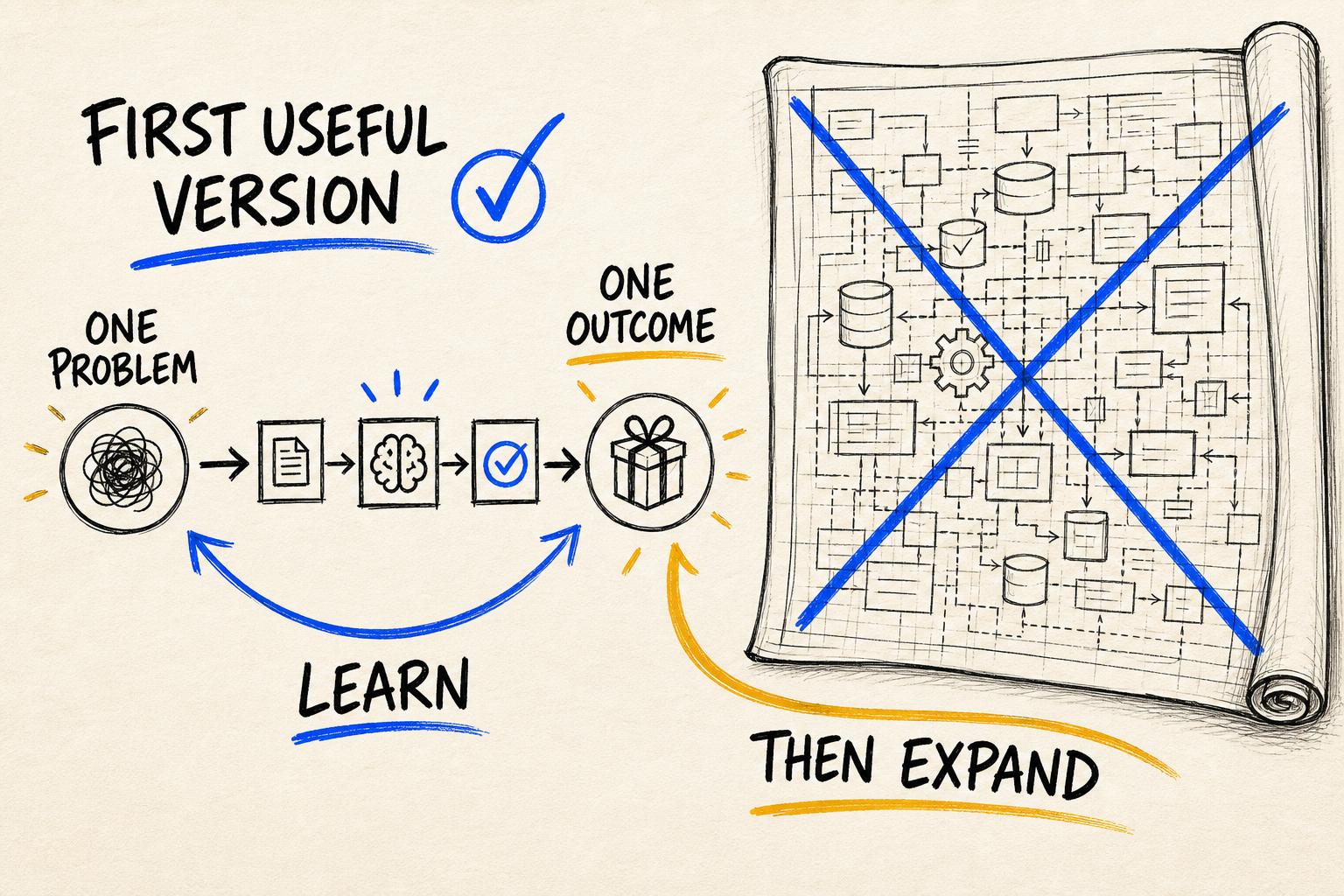
The project did not become difficult because the original idea was weak. It became difficult because every good idea was invited into version one.
A simple workflow became a dashboard. The dashboard needed permissions. Permissions led to roles, settings and audit history. Then came multiple models, more integrations and a future platform hiding inside an untested prototype.
I could feel the energy changing. At first, everyone was excited by a clear outcome. Later, we were managing a growing list of unknowns. I was busy, but we were not learning whether the core idea helped anyone.
Reducing the scope felt like admitting the larger vision was wrong. In reality, it was the first decision that protected the vision.
The product kept getting more complete and less testable.
Every additional feature introduced another assumption about data quality, model behavior, security, integrations or user needs. None of those questions were unreasonable. Together, they made it impossible to know which risk mattered most.
- One user
- One repeated problem
- One defined input
- One useful output
- One review step
- One measurable improvement
I returned to the original conversation and asked what one outcome would make the user say, ‘This already helps me.’ That question removed most of the roadmap from the first release.
We chose one result the workflow could deliver reliably.
The product did not need to solve the whole operation. It needed to turn one meeting into a structured task list, review one document for missing information or prepare one grounded weekly summary. Usefulness became the boundary.