AI consultant skills7 min read · 15 / 20

I could not deliver useful AI by thinking like only one role.

The product problem, technical system and operating reality kept colliding. The work became effective only when I learned to move between all three.

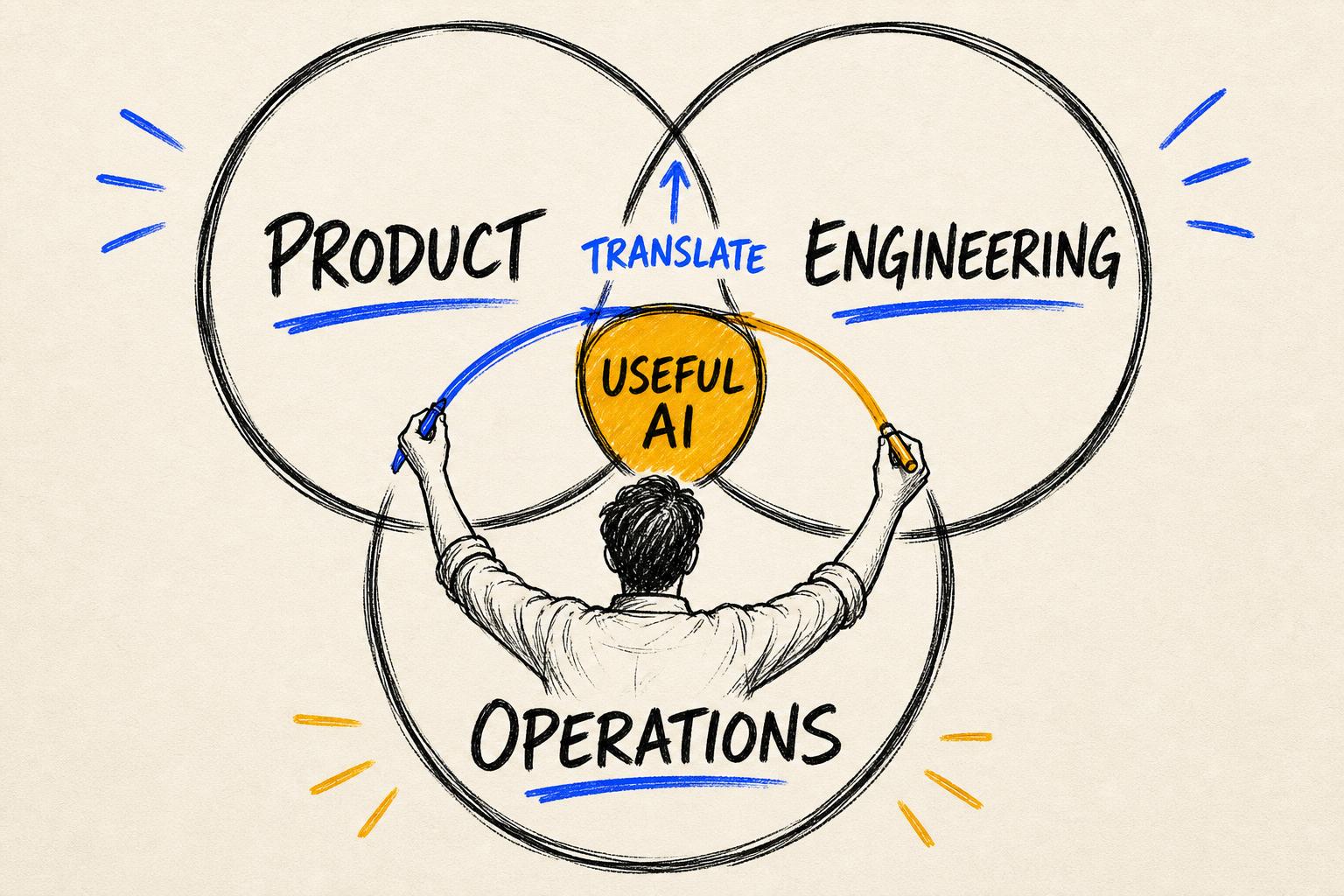
Hand-drawn person connecting product strategy, engineering architecture and business operations into one AI delivery workflow.
Useful AI sits where the right problem, a dependable system and a workable operating model meet.

The prototype worked. The workflow did not. That gap taught me the kind of AI practitioner I needed to become.

A technically strong solution could fail because it did not match how people worked. A well-defined product could fail because the integration was unrealistic. A useful prototype could fade because nobody owned the process after launch.

I kept moving between conversations: business pain, product scope, architecture, security, training and ongoing support. At first, the range felt like fragmentation.

Over time, I saw that translation across those disciplines was the job, not a distraction from it.

01 / Product thinking

I had to protect the problem from the excitement of the solution.

Understanding the user, defining the outcome and controlling scope prevented the team from building capabilities without a reason to exist.

  • User need
  • Problem definition
  • Priority
  • Scope
  • Success metric
  • Feedback loop

Product thinking gave every technical decision a clear question: which user problem or success measure does this serve?

02 / Engineering thinking

The model needed a dependable system around it.

Data handling, permissions, integrations, validation, performance and monitoring turned an AI capability into something a business could actually rely on. The invisible architecture carried the trust.

The three lenses

I make better AI decisions when I look at the same workflow as a product manager, engineer and operator.

01

Product

Define who needs help, which problem matters now and what useful change proves the idea.

User · outcome · scope · learning
02

Engineering

Design the data, integrations, security, validation and reliability that make the promise real.

Architecture · test · deploy · monitor
03

Operations

Create ownership, approval, training, exception and maintenance paths that help the new way of working stick.

Owner · review · support · adoption
03 / Operations makes it usable

The product had to survive contact with responsibility, exceptions and change.

We defined who reviewed outputs, what happened when the system failed, how users learned the workflow and who maintained it after launch.

01Problem owner02User outcome03Technical boundary04Data access05Approval path06Exception handling07Training08Ongoing ownership

Those questions were not post-launch details. They determined whether employees would trust the new process or quietly return to the old one.

The role in one sentenceUnderstand the problem like a product manager, design the system like an engineer and make it work like an operator.
04 / Moving fast responsibly

Experimentation and governance stopped feeling like opposing forces.

Rapid prototypes helped the team learn, while clear boundaries around data, privacy, cost, quality and accountability protected the organization.

Clear problemFeasible systemResponsible scopeOperational ownershipFaster learningLasting adoption

Working across disciplines made those trade-offs visible early, when changing direction was still inexpensive.

What I carry forward

AI delivery is a hybrid discipline because real work refuses to stay inside one job description.

The skills develop through discovery calls, prototypes, integration problems, production failures, cost reviews and team training, not through theory alone.

I have become more comfortable crossing boundaries because that is where the most important misalignment usually appears.

The future belongs to people who can connect AI technology to the full reality of how work becomes useful.