We had spent an hour creating clarity together. Within days, the clarity was already fragmenting.
One participant remembered a suggestion as a decision. An action item had no owner. A risk raised near the end never reached the project plan. The transcript existed, but the work had not moved.
I realized the meeting process had been optimized for the time everyone was present. Nothing had been designed for what the organization needed after people left.
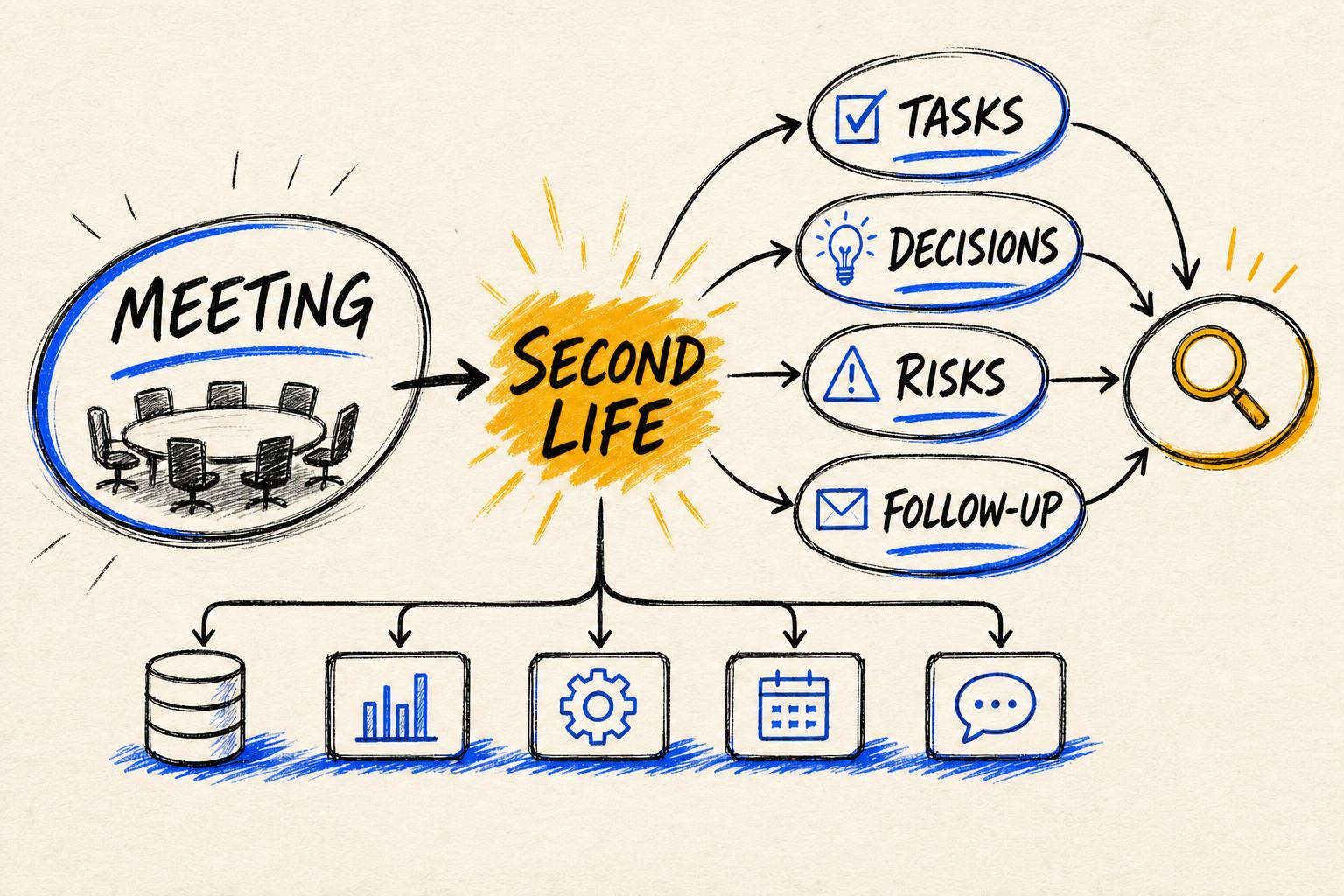
That is when I began thinking of every meeting as the start of several operational outputs, not the end of one conversation.
One summary could not serve every purpose the meeting created.
Leadership needed a concise view. Delivery needed tasks and owners. Product needed requirements. The account team needed risks and follow-up questions.
- Executive summary
- Confirmed decisions
- Actions and owners
- Requirements
- Risks
- Open questions
Separating those outputs made the conversation easier to act on without forcing everyone to reread the complete transcript.
The workflow had to preserve the difference between an idea and a decision.
We labeled confirmed items, proposals, assumptions, questions, rejected approaches and future considerations. That distinction prevented a passing comment from quietly becoming scope.