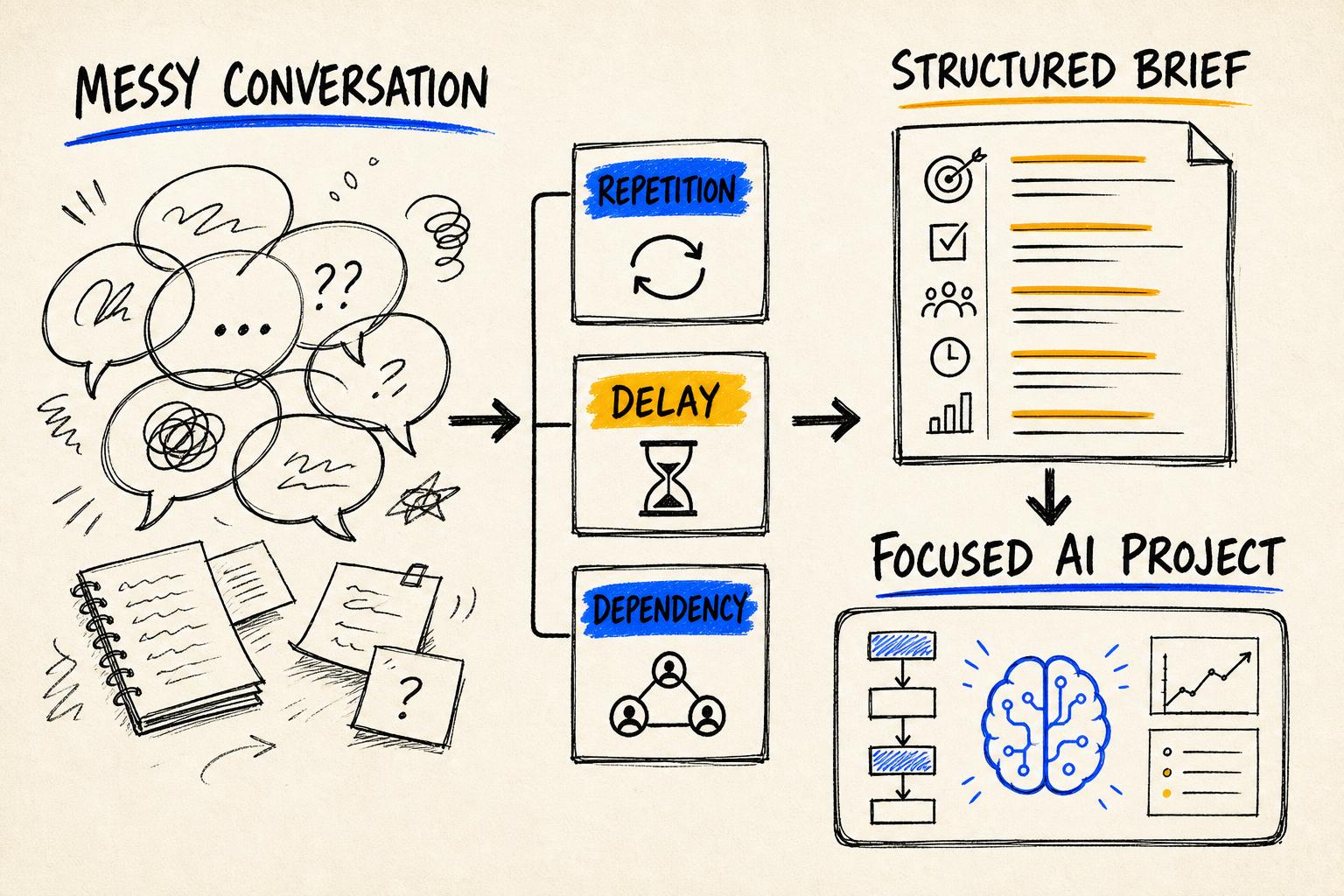
I know the feeling: the call ends, the notes are full, and the answer is still nowhere in sight.
I have experienced versions of this moment many times. One person describes a repetitive task. Another mentions a spreadsheet that only one employee truly understands. A manager talks about delays. A team member explains how they copy the same information between systems every day.
Everyone is describing a real problem, but the stories do not yet connect. I feel energized because I can sense the opportunity. At the same time, I feel uncomfortable because there is no single requirement, no obvious product and no neat answer to take away.
I used to believe a strong discovery call should end with a crisp feature list. Now I know that pressure can make us choose a tool too early. The unresolved moment after the conversation is not the end of discovery. It is where the real discovery starts.
The conversation felt messy because the workflow was messy.
After the call, I stopped trying to summarize what everyone had said. Instead, I started tracing how the work actually moved from one person to another. The official process sounded clean: receive a request, review it, prepare a response, approve the work and deliver the result.
- Searching through previous emails
- Copying data from multiple platforms
- Asking a senior employee for missing context
- Reformatting information manually
- Waiting for approval
- Correcting errors caused by incomplete inputs
That was the first turning point for me. The confusion was not a sign of poor discovery. It was evidence that the real workflow lived between systems, handoffs and people’s memories. The conversation had exposed what the process document could not.
I stopped hunting for an AI idea and listened for three signals.
Once I let go of needing an immediate solution, three patterns became easier to hear: work that repeated, work that waited and work that depended on one person’s knowledge. Those signals did not tell me to automate everything. They showed me where to look more carefully.